NEXGEN STEM ACADEMY
  • Home
  • At a Glance
  • Academic Studies
    • Academic Content Focus Areas >
      • Environmental Studies
      • Agricultural Studies
      • Engineering Design and Emerging Technologies
      • Engineering/ Computer Science: Project Lead the Way- Gateway
    • Academic Units of Study
    • Academic Unit Capstone Project Showcase >
      • 6th Cryptid Hunters
      • 7th Patient Zero
      • 8th Project Vulcan
      • 6th-8th Project Green
      • 6th-8th The Bee's Knees!
  • Lab Facilities
    • NeXus- Hub for Innovation
    • Lab for Agriculture and the Environment >
      • NexGen Garden Guide
  • Leadership and Faculty
    • Curriculum Specialist/ Natural Sciences >
      • Chad Pavlekovich, Ed.D.
    • Social Studies
    • Engineering/Computer Science
    • Mathematics >
      • Katie Serenyi, M.Ed.
    • Literacy and Research
  • Extracurricular
    • Robotics: FIRST Lego League
  • Events
    • The Great STEM(+) Expo
    • A Seminar on the Plausability of Cryptids
    • Patient Zero: Searching for the Answers to the Unknown Illness Amoung Us
  • Portraits of Success: Our Legacy Defined

NEXGEN STEM PROGRAM

A Wicomico County Public Schools Signature School Program
Building the Next Generation of Leaders Inspired by Curiosity, Creativity, and Innovation.

ABOUT NEXGEN

OUR MISSION

The NexGen STEM Program seeks to build the next generation of leaders that are inspired to assess and solve community and global problems collaboratively through curiosity, creativity, and innovation.

Plants in the NexGen Garden and How to Harvest them…

This page is student generated, and includes information on the plants we currently have in the garden including, the location in the garden of the plants, general information on the plants, when to harvest, and how to harvest. It also includes pictures of the plants we have and sample recipes that can utilize the ingredients from the available plants. 
Picture

Bed 1

Items and Pictures: 
Picture
Big Beef Tomato
Picture
Sweet Tomato
General Information: 
Big Beef Hybrid Tomato:
  • Big Beef tomatoes produce heavy yields of large "beefy" fruit. The tomatoes have a rich flavor, good uniformity, and are very disease resistant.
  • The huge globe-shaped fruits size up about 10 to 12 oz each. without the cracked tops or fibrous Interiors of older beefsteak varieties. 
Sweet Tomato:
  • The Super Sweet 100 Cherry Tomato (or Sweet Tomato) is a hybrid tomato that has long fruit-bearing stems and can produce 100 or more super sweet cherry tomatoes.
  • Fruits weigh approximately 1 oz., and are 1 inch across. Plants need caging or staking, and produce fruit throughout the growing season.

How to Care for Plants: 
Big Beef Hybrid Tomato:
  • You'll need stakes or wire tomato cages to support the plants and keep the fruit off the ground where it might rot. Tomatoes need even watering to prevent rotting.
  • Water thoroughly but not too often (twice per week should suffice at first), and try to water early in the day so that plants will dry off before evening.
Sweet Tomato:
  • Stake or cage these vigorous climbers to keep the fruit off the ground and avoid pests and diseases.
  • These tomatoes need at least one inch (2.5 cm) of water per week and prefer six hours or more of direct sun each day.

Location: 
You can find both of these plants in the first bed when you walk in on the left in the garden.
How to Harvest: 
Big Beef Tomatoes: 
  • Harvest to 3 to 5-inch fruits after they turn fully red. 
  • They will also ripen off the vine at room temperature. Indeterminate tomato plants are vines, so staking is required to keep the fruit off the ground. Prune off suckers that form between the main stem and the branches.
Sweet Tomatoes:
  • Take scissors or pruners and cut the fruiting branch at the main stem and wrangle them all in one fell swoop, much like harvesting grapes.

Recipes (place these titles in a Google Search): 
Big Beef Tomatoes (Tomato Ricotta Phyllo Tart):
Ingredients
1 roll (about 21 sheets)
1/4 cup olive oil
1 1/4 cups ricotta cheese
1 tablespoon chopped fresh basil, plus more for topping
1 tablespoon chopped fresh chives, plus more for topping
1/2 teaspoon lemon zest
Salt and pepper, to taste
1 1/2 to 2 lbs tomatoes, sliced to 1/4-inch thickness (and/or grape tomatoes, sliced in half)

Instructions
Heat oven to 400 degrees F. Line a rimmed baking sheet with parchment paper.
Lay 1 sheet of fillo dough on parchment paper. Brush lightly with olive oil. Top with another sheet of fillo dough; brush lightly with oil. Repeat until all fillo dough sheets are stacked.
In a medium bowl, stir together ricotta cheese, basil, chives, lemon zest and salt and pepper to taste until well combined. Spread evenly on top of fillo dough, leaving a 1-inch border along edges.
Top with sliced or halved tomatoes. Sprinkle with more salt and pepper. Bake 30 minutes until dough is golden brown and flaky.
Cool tart slightly; top with more chopped basil and chives and salt and pepper, if desired. Serve warm or at room temperature.

Sweet Tomatoes (Tart):
Serves 8
Ingredients
1 2-inch deep 9-inch tart pan lined with the pastry of your choosing, chilled
2/3 cup almond meal or flour
1 teaspoon ground cinnamon
Pinch ground clove
Pinch ground nutmeg
Pinch sea salt
1 teaspoon vanilla extract
3 ounces dark rum (you can sub orange juice)
1 14-ounce can tomato puree, preferably a premium brand from Europe 
4 eggs, separated
7 ounces granulated sugar

1. Heat your oven to 350°, with a sheet pan in the oven preheating.
2. Mix the almond flour, spices, and salt in a small bowl.
3. Mix the rum and vanilla into the tomato puree.
4. Beat your egg whites to stiff peaks, then transfer to a different bowl. You do not need to clean the bowl or whisk attachment. Add the egg yolks and sugar to your mixer bowl and beat with the whisk attachment on your stand mixer on high until they are pale in color and have doubled in volume.
5. Switch to the paddle attachment. Add the dry mix, followed by the tomato mix until well blended.
6. Remove the bowl and fold in the egg whites by hand with a spatula or large balloon whisk in three additions.
7. Gently pour the filling into the chilled crust and put in the oven on the preheated sheet pan. Bake 1 hour to 1 hour 15 minutes, rotating the pan as needed, until the filling is puffed like a souffle browned and cracked, and still has a bit of movement in the center. Let cool on a rack. The filling will collapse.
8. Dust with powdered sugar and serve at room temperature with vanilla ice cream or whipped cream.

Bed 2

Items and Pictures: 
Picture
Sweet Tomato
Picture
Pink Brandywine Tomato
General Information: 
Sweet Tomato:
  • The Super Sweet 100 Cherry Tomato (or Sweet Tomato) is a hybrid tomato that has long fruit-bearing stems and can produce 100 or more super sweet cherry tomatoes.
  • Fruits weigh approximately 1 oz., and are 1 inch across. Plants need caging or staking, and produce fruit throughout the growing season.
Pink Brandywine Tomato:
  • The fruit can weigh up to 1.5 lbs and can be 9-16 oz. It is dark reddish pink with ribbed shoulders and smooth flesh.
  • It is considered one of the benchmarks for intense tomato flavor. The indeterminate vines are vigorous, so use tall cages.

How to Care for Plants: 
Sweet Tomato:
  • Stake or cage these vigorous climbers to keep the fruit off the ground and avoid pests and diseases.
  • These tomatoes need at least one inch (2.5 cm) of water per week and prefer six hours or more of direct sun each day.
Pink Brandywine Tomatoes:
  • The plants need full sun and should be spaced 18 to 36 inches (45 to 90 cm.) apart or in separate containers. Soil should be nutrient-rich and should drain well and regular watering is crucial.


Location: 
These plants can be found in the middle bed along the left side of the garden.
How to Harvest: 
Sweet Tomatoes:
  • Take scissors or pruners and cut the fruiting branch at the main stem and wrangle them all in one fell swoop, much like harvesting grapes.
Pink Brandywine Tomatoes:
  • Pink Brandywine tomatoes are ready to harvest about 80 days after planting, or from June to October. You can tell they're ready when they're fully pink-red, have shiny skin, and are somewhat soft when squeezed, but before they crack or rot.

Recipes (place these titles in a Google Search): 
Sweet Tomatoes (Tart):
Serves 8
Ingredients
1 2-inch deep 9-inch tart pan lined with the pastry of your choosing, chilled
2/3 cup almond meal or flour
1 teaspoon ground cinnamon
Pinch ground clove
Pinch ground nutmeg
Pinch sea salt
1 teaspoon vanilla extract
3 ounces dark rum (you can sub orange juice)
1 14-ounce can tomato puree, preferably a premium brand from Europe 
4 eggs, separated
7 ounces granulated sugar

1. Heat your oven to 350°, with a sheet pan in the oven preheating.
2. Mix the almond flour, spices, and salt in a small bowl.
3. Mix the rum and vanilla into the tomato puree.
4. Beat your egg whites to stiff peaks, then transfer to a different bowl. You do not need to clean the bowl or whisk attachment. Add the egg yolks and sugar to your mixer bowl and beat with the whisk attachment on your stand mixer on high until they are pale in color and have doubled in volume.
5. Switch to the paddle attachment. Add the dry mix, followed by the tomato mix until well blended.
6. Remove the bowl and fold in the egg whites by hand with a spatula or large balloon whisk in three additions.
7. Gently pour the filling into the chilled crust and put in the oven on the preheated sheet pan. Bake 1 hour to 1 hour 15 minutes, rotating the pan as needed, until the filling is puffed like a souffle browned and cracked, and still has a bit of movement in the center. Let cool on a rack. The filling will collapse.
8. Dust with powdered sugar and serve at room temperature with vanilla ice cream or whipped cream.Pink Brandywine

Tomato (Heirloom Tomato Soup):

Ingredients
  • 3 lbs heirloom tomatoes approx 5 medium-large
  • 2 whole garlic cloves
  • 1 small yellow onion
  • 1 roasted red bell pepper peeled
  • 1/2 tsp chili flakes
  • salt
  • olive oil

Instructions
  • Preheat oven to 350 degrees.
  • Slice heirloom tomatoes into large wedges. Add to roasting pan.
  • To the tomatoes add two whole peeled garlic cloves and sprinkle with salt.
  • Roast in the oven for approx 1 hour or until tomatoes are soft and have released their juices.
  • In a medium saucepan, heat a glug of olive oil. Add chili flakes and chopped yellow onion. Saute until onions are translucent.
  • Once the tomatoes are done roasting, add them to the saucepan and stir to incorporate.
  • Blend in a high-speed blender or with an immersion blender until creamy smooth.
  • Serve warm with crusty bread, grilled cheese or whatever else makes you happy.

Bed 3

Items and Pictures: 
Picture
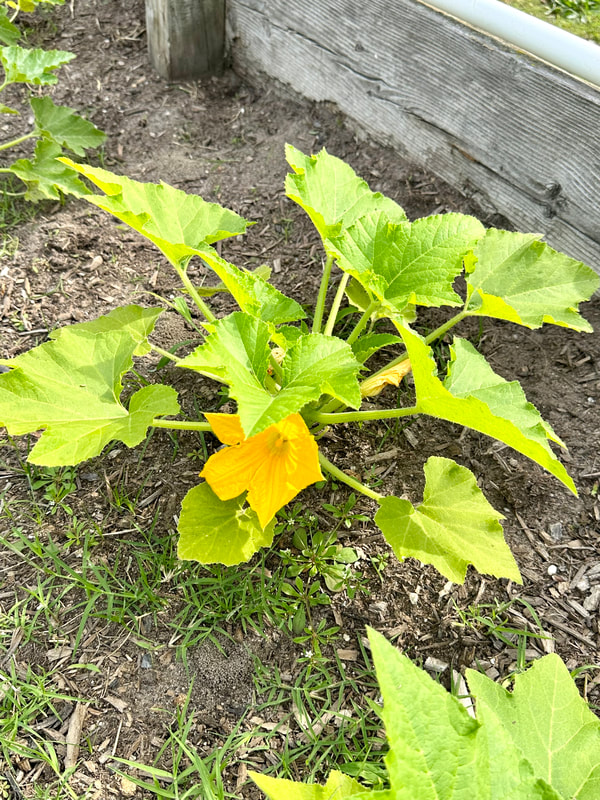
Black Beauty Zucchini
Picture
Pumpkin
Picture
Summer Squash
General Information: 
Black Beauty Zucchini:
  • This variety of zucchini is an heirloom. It matures early and is quite prolific. It has very dark green skin and a creamy color inside. These quick-growing plants are quite easy to grow and will continue to produce regularly through the summer if the zucchini is regularly picked.
Pumpkin Plants:
  • Pumpkins, which produce very long annual vines, are planted individually or in twos or threes on little hills about 2.5 to 3 meters (8 to 10 feet) apart. Botanically, pumpkin fruits are a type of berry known as a pepo. They are generally large, 4–8 kg (9–18 pounds) or more, though some varieties are very small.
Summer Squash Plant:
  • Summer squash are vegetables with thick rinds that can be eaten and are normally green or yellow, depending on their variety. They can be cylindrical or more round shaped. Zucchini and yellow summer squash are the most common types of squash that are grown in the summer months.

How to Care for Plants: 
Black Beauty Zucchini:
  • Grow them in rich, well-drained soil in full sun. Dig finished compost or well-rotted manure into the beds, and dig in 1 cup of complete organic fertilizer beneath each transplant. Water the soil around them when you irrigate, and always avoid overhead watering, as wet leaves will attract diseases like mildew.
Pumpkin Plant:

  • Pumpkins require a lot of water, so it's best to use a soaker hose or drip irrigation. Avoid wetting the leaves. Give your pumpkins plenty of nourishment with continuous-release plant food. As pumpkins start to form, elevate them off the soil to prevent rotting.
Summer Squash:
  • Squash rely on consistent moisture but avoid wetting the leaves; 1 to 1.5 inches of water weekly is best. Make the most of your food growing efforts by keeping plants fed with a continuous-release plant food.

Location: 
These plants can be found in the horizontal bed in the back of the garden. 

How to Harvest: 
Black Beauty Zucchini:
  • Cut the zucchini from the vine, leaving an intact stem attached to the zucchini fruit. Having a stem section (1/2 to 1 inch) helps the zucchini store longer.
Pumpkin Plant:
  • Carefully cut the fruit off the vine with a sharp knife or pruners; do not tear it. Be sure not to cut too close to the pumpkin. Leave 3 to 4 inches of stem to increase its keeping time. Handle pumpkins very gently, or they may bruise.
Summer Squash:
  • Use a garden pruner or sharp knife to cut the fruit away from the vine; leave a short stem attached to the fruit to extend the storage life. Don't tug or pull fruit from the vine; you could injure the plant.

Recipes (place these titles in a Google Search): 
Black Beauty Zucchini (Marinated Zucchini With Hazelnuts and Ricotta):
Ingredients
  • 3 medium summer squash or zucchini (or pattypan squash), cut in half lengthwise
  • 1½ tsp. kosher salt, plus more
  • ¼ cup blanched hazelnuts
  • 6 Tbsp. extra-virgin olive oil, divided, plus more for drizzling
  • 1 small bunch mint, divided
  • 1 small garlic clove, finely grated
  • 2 Tbsp. white wine vinegar
  • ¾ tsp. sugar
  • ½ tsp. crushed red pepper flakes
  • Freshly ground black pepper
  • ½ lemon
  • ½ cup fresh ricotta
  • Flaky sea salt
  • Toasted country-style bread (for serving)

Preparation
  • Step 1
  • Preheat oven to 300°. Toss squash and 1½ tsp. kosher salt in a colander; set over a bowl. Let sit 10 minutes, then pat dry with paper towels.
  • Step 2
  • Toss hazelnuts and 1 Tbsp. oil on a rimmed baking sheet and roast, shaking occasionally, until golden brown, 15–20 minutes. Let cool; crush into large pieces with a measuring cup or glass.
  • Step 3
  • Smack 3 mint sprigs against your cutting board a few times to release their flavor; mix in a large bowl with garlic, vinegar, sugar, red pepper flakes, and 2 Tbsp. oil; set dressing aside.
  • Step 4
  • Heat 2 Tbsp. oil in a large skillet, preferably cast iron, over medium-high until shimmering. Arrange squash cut side down in skillet, breaking into smaller pieces if needed in order to fit in a single layer, and cook, moving around in pan to ensure even browning, until golden brown on cut side, about 5 minutes. Reduce heat to medium-low, cover (if you don’t have a lid use a baking sheet), and continue to cook until very tender, about 15 minutes. Transfer to a cutting board and let cool slightly.
  • Step 5
  • Cut squash into 2" pieces and toss in reserved dressing to coat; season with kosher salt and black pepper. Let sit at room temperature, tossing occasionally, 15 minutes. Pluck out mint sprigs; discard.
  • Step 6
  • Meanwhile, zest lemon half into a small bowl, mix in ricotta and remaining 1 Tbsp. oil; season with kosher salt. Hang on to that lemon.
  • Step 7
  • Spread lemon ricotta over platter. Top with squash and their juices. Squeeze reserved lemon over. Pull leaves from remaining mint sprigs (you want about ¼ cup). Scatter mint and hazelnuts over squash. Drizzle generously with oil and sprinkle with sea salt. Serve with toast.

Pumpkin (Pie):
Ingredients
  • 1 9-inch Homemade pie crust , or store-bought, deep dish, unbaked
  • 3/4 cup granulated sugar
  • 1 teaspoon ground cinnamon
  • 1/2 teaspoon salt
  • 1/2 teaspoon ground ginger
  • 1/4 teaspoon ground cloves
  • 2 large eggs
  • 15 ounce can canned pumpkin or fresh pumpkin puree
  • 12 ounce can evaporated milk

Instructions
  • Preheat oven to 425 degrees F.
  • In a large bowl beat the eggs and pumpkin together.  In a separate bowl, combine the sugar, cinnamon, salt, ginger and cloves, and add to pumpkin mixture.
  • Gradually stir in the evaporated milk. Carefully pour mixture into unbaked pie shell. 
  • Bake at 425 degrees F for for 15 minutes. Reduce temperature to 350° F; bake for 40 to 50 minutes longer, or until the pie is set. Check for doneness by giving the pie a gentle wiggle. The center may jiggle just a tiny bit. It will continue to set up as it cools. Or, it is done when a sharp knife inserted in center comes out clean.
  • Cool completely on a wire cooling rack. Serve immediately with whipped cream and caramel pecan topping, if desired.
  • Notes
  • Make Ahead Instructions: You can make the entire pie the day before and store it the refrigerator, or prepare the pie crust and filling the day before and store them separately in the refrigerator until ready to bake the next day.
  • Storage Instructions: Store-bought pumpkin pies can sit at room temperature because of the preservatives added, but homemade pumpkin pie should be refrigerated if not eaten within 2 hours of sitting out.  Leftover pumpkin pie will keep in the refrigerator for 3-4 days.  Be sure to allow pumpkin pie to cool completely and then cover it loosely with plastic wrap, for storing.
  • Freezing Instructions: Cooked pumpkin pie can be frozen for up to 3 months, covered well. You can also freeze the pie crust for up to 3 months. Thaw pumpkin pie overnight in the refrigerator before serving.
  • Caramel Pecan Topping: 
  • ½ cup light brown sugar, packed
  • 2 tablespoons heavy whipping cream
  • 1 tablespoon light corn syrup
  • 1 tablespoon butter
  • ½ cup chopped pecans
  • ½ teaspoon vanilla extract
  • Add brown sugar, cream, corn syrup, and butter to a small saucepan over medium high heat. Bring to a boil, then reduce heat and simmer, uncovered, for about 5 minutes, stirring frequently.
  • Remove from heat and stir in chopped pecans and vanilla. The topping will thicken as it cools. Spoon topping over cooled pumpkin pie slices and top with whipped cream.
Summer Squash (Roasted Summer Squash):

Ingredients  
  • 1 pound summer squash about 2 medium
  • 1 tablespoon olive oil
  • 2 tablespoons parmesan cheese grated
  • 1 tablespoon panko bread crumbs
  • 1 teaspoon lemon pepper seasoning
  • ½ teaspoon paprika
  • ½ teaspoon kosher salt or to taste

Instructions 
  • Preheat oven to 400°F.
  • Cut squash into ½" slices. Toss with olive oil.
  • Combine remaining ingredients in a small bowl and toss with squash.
  • Place squash on a baking pan and roast 12-14 minutes or until squash is tender. Broil 1-2 minutes or until crumbs are lightly browned.


Bed 4

Items and Pictures: 
Picture
Potatos
Picture
Onions
General Information: 
Potato Plant:
  • The potato plant, Solanum tuberosum, is a herbaceous perennial that can grow up to 3.3 ft (1 m) tall. It has hairy stems that can be green, purple, or mottled, and pinnate leaves with 3–4 pairs of large leaflets and smaller ones in between. The leaves can range in size from 8–22 x 5–13 cm, with petioles that are 2–6 cm long.
Onion Plant:
  • The onion plant has a fan of hollow, bluish-green leaves, and its bulb at the base of the plant begins to swell when a certain day-length is reached. The bulbs are composed of shortened, compressed, underground stems surrounded by fleshy modified scale (leaves) that envelop a central bud at the tip of the stem.

How to Care for Plants: 
Potato Plants:
  • Space potato plants 12 to 14 inches apart. Lay down a 6-inch layer of straw to keep soil temperatures between 60° and 70° F. Feed growing potatoes with a continuous-release plant food to maximize your harvest potential. Harvest potatoes 2 to 3 weeks after plants flower.
Onion Plants:
  • Grow them in a sunny spot that has fertile, well-drained soil with a pH of 6.0 to 6.8. Improve your native soil by mixing in several inches of aged compost or other rich organic matter. Onions aren't great at taking up water, so it's important to keep soil moist so their shallow roots can drink up.

Location: 
These plants are located in the bed behind the one with the FarmBot in the center of the garden.
How to Harvest: 
Potato Plants:
  • Two weeks after the vines have flowered, you can, if you wish, reach into the soil or mulch and retrieve a few baby potatoes. Otherwise, wait until the vines die back. Dead vines signal that the tubers have reached maturity. Now reach into the soil with your hands and pull the tubers up.
Onion Plants:
  • Careful handling is essential during harvest to avoid bruising, which makes the bulbs susceptible to storage rot. Onions can either be lifted by gently pulling them by their foliage or by pushing them up with a garden fork inserted below the bulbs.

Recipes (place these titles in a Google Search): 
Potatoes (Oven Roasted):
Ingredients
  • 2 pounds small potatoes, halved or quartered
  • Extra-virgin olive oil, for drizzling
  • Sea salt and freshly ground black pepper
  • Finely chopped fresh parsley, for garnish
  • dressing:
  • 2 tablespoons extra-virgin olive oil
  • 1 teaspoon lemon zest
  • 2 tablespoons fresh lemon juice
  • 1 teaspoon Dijon mustard
  • 2 garlic cloves, minced
  • 1 tablespoon minced fresh rosemary, or thyme
  • ¼ teaspoon red pepper flakes
  • ¼ teaspoon sea salt
  • Freshly ground black pepper

Instructions
  • Preheat the oven to 425°F and line a large baking sheet with parchment paper.
  • Toss the potatoes with olive oil, salt, and pepper, and spread evenly on the baking sheet. Roast 20 to 30 minutes, or until tender and golden brown around the edges. The timing will depend on the size and freshness of your potatoes.
  • Make the dressing: In a small bowl, whisk together the olive oil, lemon zest, lemon juice, mustard, garlic, rosemary, red pepper flakes, salt, and pepper.
  • Drizzle the dressing onto the cooked potatoes and gently toss. You may not need all of the dressing. Season to taste with more salt and pepper. Sprinkle with parsley and serve.

Onion (Marinated and Roasted):
Ingredients 
  • MARINADE
  • 1 cup water
  • 1 cup red wine vinegar
  • 2 tbsp brown sugar
  • 2 tsp fresh rosemary chopped
  • 1/2 tsp kosher salt
  • 1/4 tsp black pepper
  • 1 pinch red pepper flakes optional
  • 4 large onions (See Note 1)

  • ROASTING
  • 4 tbsp butter
  • 1 tsp fresh rosemary chopped

Instructions 
  • Blend marinade ingredients in small bowl and pour into a baking dish that will hold all 8 onion halves. 
  • Trim the end of onions and cut horizontal (leaving skin on) and place cut side down in marinade. Marinate overnight covered in refrigerator.
  • Preheat oven to 400°F. Flip the onions over in the marinade, and lay on the flat bottom of each side. Top each onion with 1/2 tablespoon of butter and remaining teaspoon of rosemary. 
  • Roast uncovered in oven for 1 hour or until golden brown and tender, basting once or twice during roasting. Remove from heat, spoon reduced sauce over and sprinkle with parsley or more fresh chopped rosemary. Remove outer skins before eating and serve.


Bed 5

Items and Pictures: 
Picture
Bush Beans
Picture
Edamame
Picture
Cucumber
General Information: 
Bush Beans: 
  • Bush beans can be further broken down into three types: snap beans (where the pods are eaten), green shelling beans (where the beans are eaten green) and dry beans, (where the beans are dried and then rehydrated before eating. In general, bush beans take less time than pole beans to produce beans.
Edamame Plant:
  • Edamame are young soybeans harvested before they ripen or harden. Available shelled, in the pod, fresh, or frozen, they are a popular, plant-based food that may be good for a person's health. Edamame beans are naturally gluten-free and low in calories. They contain no cholesterol and provide protein, iron, and calcium.
Cucumber Plant:
  • They grow on vines with large, rough leaves. The vines are hairy, spiraling, and can climb. Cucumbers need proper sunlight, hydration and temperature for growth. Cucumbers are made up of mostly water, but also contain vitamins A, C and B6.

How to Care for Plants: 
Bush Beans: 
  • Because they grow during the summer heat with plenty of warmth and sun, mulch around the base of the plant to help retain a consistent moisture level (and prevent competing weeds from forming). Bush beans will stop flowering if put under the stress of drying out; a consistent watering schedule is required.
Edamame Plant:
  • Growing edamame plants will need moist soil until they mature. Once established, water them only when the top inch of soil is dry. Keep your plants going strong by feeding them regularly with water-soluble plant food. Apply a layer of mulch made from finely ground leaves or bark once plants reach 6 inches tall.
Cucumber Plant:
  • Cucumbers will grow quickly with little care. Be sure they receive an inch of water every week. Make the most of your food growing efforts by regularly feeding plants with water-soluble plant food. When soil is warm, add a layer of straw mulch to keep fruit clean and help keep slugs and beetles away.

Location: 
These plants are located near the picnic table towards the right side of the garden.
How to Harvest: 
Bush Beans:
  • Bush beans, also known as green beans or snap beans, are ready to harvest 7–14 days after flowering, when the pods are full size, firm, and have small seeds. You can tell if they're mature by breaking them in half and listening for a snapping sound. If they don't snap, they're probably too young. Avoid picking beans that are big and bulging, as they're starting to go to seed and will be more fibrous and starchy. 
Edamame Plant:
  • Edamame is usually harvested by hand on small farms and can be harvested similarly to peas or green beans. Gently pulling them off the plant or using garden shears and then placing into bins or baskets is how most hand-harvesting is done.
Cucumber Plant:
  • Plan to pick cucumbers early in the morning when the plant vines are cool and damp with dew. When harvesting cucumbers, use a sharp knife or clippers to separate them from the vine. Twisting the stems can cause tearing of the vines and cause subsequent damage to the plant.

Recipes (place these titles in a Google Search): 
Bush Beans (Canned and Baked):

Ingredients
  • 2 28 oz. cans Bush’s Original Baked Beans
  • 1/2 cup ketchup
  • 1/2 cup brown sugar
  • 1 tablespoon regular yellow mustard
  • 1 teaspoon cinnamon
  • 4 strips bacon (uncooked and cut into 1 inch pieces)

Instructions
  • Preheat oven to 325 degrees F.
  • Open and drain extra liquid from cans of beans.
  • Combine beans, ketchup, brown sugar, mustard and cinnamon in a dutch oven or casserole.
  • Drop bacon pieces on top of bean mixture.
  • Bake 45 minutes covered. Remove cover.
  • Bake an additional 15 minutes.
  • Beans are done when the bacon is crisp, and the beans are bubbling.
  • Remove from oven. Let sit 10 minutes before serving.
Edamame (Garlic Recipe):
Ingredients
  • 1 bag frozen edamame
  • 3 cloves garlic
  • 2 tablespoons olive oil
  • coarse sea salt
  • low sodium soy sauce (+ wasabi, if you have it!)

  • Instructions
  • Boil the edamame as directed on package. Drain and set aside.
  • In a large skillet, heat 2 tablespoons olive oil. Crush the 3 cloves of garlic, but leave them in 1 piece. Toss them into the skillet with the edamame (I did it in 2 batches) and saute until the outsides of the edamame are just browning.
  • Serve in a large bowl with a bowl on the side for the edamame shells. Serve with low sodium soy sauce (regular works, but it’s pretty strong so you might want to water it down a bit) and add a little wasabi paste if you have it.
Cucumber (Salad Recipe):
Ingredients
  • 2 English cucumbers, very thinly sliced
  • ½ large red onion, very thinly sliced
  • ¼ cup white wine vinegar
  • 1 tablespoon honey or agave nectar
  • 1 teaspoon sea salt
  • 2 tablespoons chopped fresh dill
  • Chopped fresh chives, optional, for garnish
  • Freshly ground black pepper

Instructions
  • In a large bowl, toss together the cucumber, onion, vinegar, honey, and salt. Chill for 20 minutes.
  • Transfer to a serving bowl, leaving any excess water behind. Sprinkle with the dill and chives, if desired. Season with several grinds of pepper and serve.


Bed 6

Items and Pictures: 
Picture
Hot Banana Pepper
Picture
Eggplant
Picture
Cal-Wonder Pepper
Picture
Pepper Scorpion
Picture
Habanero
Picture
Carolina Reaper
​
General Information: 
Hot Banana Pepper:
  • The banana pepper is a mild, medium-sized chili pepper with a tangy, slightly sweet taste. It is not considered a hot pepper, offering either no heat or a slight tingle. Compared to the mildest jalapeno pepper, it is 5 times milder, if offering any heat at all.
Cal-Wonder Pepper:
  • The California Wonder pepper is a standard bell pepper that's been a favorite among gardeners and in the commercial food market since the 1920s. It's known for being easy to grow, disease resistant, and producing large, juicy, crunchy fruits. 
Pepper Scorpion:
  • The Trinidad Scorpion hot pepper grows well in Texas, Arizona, Florida, and all hot areas. The heat on this pepper is so strong, it feels like your tongue is being stung by a scorpion! Heat levels can reach as high as 2,000,000 SHUs, so we urge you to be careful handling these peppers no matter how you use them.
Habanero Pepper:
  • Habaneros are a type of hot chili pepper that are a member of the Capsicum chinense species. They are native to Central and South America, but are now grown in many places, including Mexico, Belize, Costa Rica, Texas, Idaho, and California.
Carolina Reaper:

  • The Carolina Reaper is a red, gnarled chili pepper that's a cultivar of the Capsicum chinense plant. It's known for being the world's hottest chili pepper, with a Scoville rating of up to 2,400,000, which is 400 times hotter than a jalapeño. However, it's also flavorful, with notes of fruit, cinnamon, chocolate, and cherry. 
  • Most eggplants are a glossy, oval-shaped vegetable with a purple- black color. There are also varieties of eggplants that are orange, white, red, or green that vary in shapes and sizes.

Eggplant:

  • Most eggplants are a glossy, oval-shaped vegetable with a purple- black color. There are also varieties of eggplants that are orange, white, red, or green that vary in shapes and sizes.
How to Care for Plants: 
Hot Banana Pepper:
  • Water 1–2 inches per week, or every day in hot climates. You can also spray the peppers with a mixture of one gallon of water and one tablespoon of Epsom salts when they start blooming and again ten days later.
Cal-Wonder Pepper:
  • Place peppers in full sun in warm climates, but be sure they have access to shade in hot temperatures. Keep well-watered. Stake to keep fruit off the ground, mulch for disease and weed control.
Pepper Scorpion:
  • These peppers require regular watering, and the soil should be kept consistently moist. Be cautious not to overwater , as excessive moisture can lead to root rot. Additionally, mulching around the plants can help retain soil moisture and reduce water evaporation.

Habanero Pepper:
  • Peppers originated in the tropical highlands of Central and South America and grow best with warm (70 to 80˚ F) days, cool (55 to 65˚ F) nights and high humidity. If the soil gets above 85˚ F you can cool the soil by applying mulch and watering frequently with cold water. The soil must be warm (at least 65° F).
Carolina Reaper:
  • Carolina Reaper is a fast growing plant and may deplete the nutrients in its soil over time. Replenish them with a gentle organic fertilizer or compost every 1-2 months depending on your location and season. Fertilize more often during the growing season and in warmer and brighter climates.
Eggplant:
  • Eggplants do best when the soil is consistent soil moisture. Water regularly, especially when the plants are young so that they develop deep roots. Avoid overhead watering to prevent disease, but consider using mulch to keep soil moist, warm, and to keep weeds down. Generally, eggplants should get an inch (2.5 cm.)

Location: 
These plants are located in the bed closest to the pond towards the right side of the garden. 

How to Harvest: 
Hot Banana Peppers:
  • Harvest Hot Banana Peppers when they reach 5-6” long and develop a firm skin. You can harvest when fruits are yellow or when they turn orange and red.
Cal-Wonder Pepper:
  • To harvest California Wonder peppers, you can use a sharp knife or scissors to cut them from the vine, leaving about 1/4 inch of stem. Avoid pulling the peppers off, as this could damage the fruit or even uproot the plant. For best flavor, eat the peppers the same day you pick them. If you can't eat them right away, they will keep for 2–3 days at room temperature, or up to two weeks in the refrigerator.
Pepper Scorpion:
  • To harvest pepper scorpion peppers, you can use a sharp instrument to cut them from the plant when they reach a usable size. You can also pick the first fruits to encourage the growth of the other peppers on the plant. When the peppers are ready to be picked, they will change color from green to yellow and then red. You can leave some peppers on the plant to mature so they can sweeten up and change color.
Habanero Pepper:
  • Habanero peppers typically turn bright orange or red when fully mature. They are 1 to 2.5 inches long and get hotter as they mature to their final orange or red color. Use a knife or garden clippers to remove peppers from the plant to prevent any damage to the plant.
Carolina Reaper:
  • When to Pick Carolina Reapers. As a general rule, only harvest Carolina reapers after they have turned red. Unripe reapers are edible, but you'll get the most heat and flavor with just-turned red pods. While harvesting, be careful not to break the skin of the peppers.
Eggplant:
  • Harvesting eggplants includes cutting a short piece of stem above the calyx (cap) attached to the top of the fruit. Use pruners or a sharp knife. Harvesting eggplants at their prime may take several days to a few weeks in succession, and frequent eggplant harvest promotes heavier yield of the fruit.

Recipes (place these titles in a Google Search): 
Hot Banana Pepper (Sauce):
Ingredients
1 lb. banana peppers about 6 or 7
1 serrano or jalapeño pepper
2-4 cloves garlic sliced
1 cup white vinegar
½ cup water bottled or filtered
2 tsp white sugar
1 tsp salt
¼ tsp black pepper
1 tsp mustard seed ground
1 tsp celery seed

Instructions
Place a mason jar (without the lid) into a large pot of water. Bring to a boil and sterilize it for about 10 minutes before removing with tongs.
Cut off the the tops of the banana peppers and serrano and remove the seeds. Slice into rings. Pack them in the mason jar.
Create the brining liquid by bringing the water, vinegar, and spices to a boil in a saucepan. Simmer for about 5 minutes, then remove from heat.
Use a funnel to pour the brine liquid over the pepper mix.
Seal the mixture and allow to cool at room temperature for about 2 hours. Refrigerate for 2-3 days to allow the flavors to infuse and let the pickled flavor develop.
Remove from fridge and use a blend until smooth.
Adjust to taste or thickness if needed, add into hot sauce bottles, and consume within a month.

Cal-Wonder (Stuffed with Cauliflower Rice)
Ingredients
1 12 oz. bag of riced cauliflower
6 good size sweet long peppers ( Sweet Twister's)
2 garlic cloves, finely minced
½ onion, diced
1 large handful of fresh parsley, chopped
6 to 8 leaves of fresh basil, chopped
1¼ cup of grape tomatoes, each one cut into 4 pieces
1 heaping ¼ cup of grated romano cheese
1 heaping cup of shredded mozzarella or fontina cheese, or any cheese that melts really good
salt and pepper to taste
olive oil

Instructions
Heat oven to 400F
Place foil on a rimmed sheet pan and drizzle the bottom with a little olive oil.
In a saute pan drizzled with olive oil, add the onion and garlic until soft then pour in the frozen cauliflower stirring until it has defrosted and cooked a little.
Add in all the other ingredients, garlic, parsley,basil, both cheese and tomatoes, plus salt and pepper to taste, mixing until all combined.
Let it cool down a bit, in the meantime prep your peppers.
Try to leave the stems on it gives a nice presentation.
Figure out which side of the pepper will lay flat and sturdy in the pan.
Cut a slit on top being careful not to go completely through the top or pointed bottom.
Pull out the seeds and ribs with your fingers, it will be easy.
Drizzle the inside with a little olive oil and some black pepper.
Fill each pepper with the cauliflower rice mixture all the way to the top.
Place them onto the rimmed sheet pan with a quick little drizzle of olive oil.
Bake for about 20 minutes or so, the cheese should be melted and the peppers starting to wrinkle and become soft.
Garnish with chopped basil and parsley.

Pepper Scorpion (Hot Sauce):
Ingredients
  • 10 scorpion peppers
  • 5 cloves of garlic
  • 1 cup of vinegar
  • 1 teaspoon of salt
  • 2 tablespoons of sugar
  • 1 medium onion chopped
  • 1 medium carrot chopped
  • ½ cup of water

Instructions
  • Wearing gloves, carefully stem and chop the scorpion peppers.
  • In a pan over medium heat, sauté the chopped onions, garlic, and peppers until they soften, about 5 minutes.
  • Add the chopped carrot and water to the pan, simmering until the carrot is soft, approximately 10 minutes.
  • Allow the mixture to cool slightly, then transfer it to a blender.
  • Add the vinegar, salt, and sugar to the blender, then carefully blend until smooth.
  • Strain the mixture through a fine-mesh sieve into a glass container.
  • Allow the sauce to cool completely, then secure it with a lid and age in the refrigerator for at least a week before use.

Habanero Pepper (Hot Sauce):
Ingredients
  • 3.5 ounces chopped habanero peppers seeds/innards included
  • 1 ounce chopped carrot
  • 1 ounce chopped garlic
  • .5 ounce chopped shallot
  • 1 cup distilled white vinegar
  • 1/4 teaspoon sweet paprika
  • 1/4 teaspoon dried oregano
  • 1/4 teaspoon sea salt
  • 1/4 teaspoon black pepper

Instructions
  • Add all of the ingredients to a small pot and bring to a boil.
  • Reduce heat and simmer, covered, for 10 minutes, or until all of the ingredients are softened.
  • Transfer to a blender or food processor and blend until smooth.
  • Taste and adjust for salt and spices. For a thinner consistency, add water 1 tablespoon at a time and process to your desired thickness.
  • Bottle and serve.

Carolina Reaper (Hot Sauce):
Ingredients
  • 3 ripe Carolina Reaper peppers
  • 2 carrots peeled
  • ½ medium onion
  • 3 cloves garlic
  • 1 ½ cups apple cider vinegar
  • ¼ cup red wine vinegar
  • 4 tablespoons tomato paste
  • ½ teaspoon smoked paprika
  • ½ teaspoon fresh ground black pepper

Instructions
  • Preheat your oven to 450 degrees.
  • Chop peeled carrots into 2" chunks and place on a rimmed baking sheet. Place the baking sheet in the oven and roast the carrots for 45 minutes, or until tender and beginning to char.
  • Approximately halfway through roasting the carrots, add the onion to the baking sheet and continue to roast the vegetables. Finally, add garlic cloves in the final five minutes of roasting.
  • Remove the roasted carrots, onion, and garlic from the oven and set the broiler to high. Place the Carolina Reapers on the baking sheet and set on the top rack, directly under the broiler, and broil peppers until beginning to char. *
  • Stir together apple cider vinegar, red wine vinegar, tomato paste, smoked paprika, and ground black pepper in a saucepan. When all vegetables are done roasting add them to the saucepan and gently simmer everything for 10 minutes (or longer) to ensure all of the vegetables have fully softened from cooking.
  • Transfer the hot sauce mixture to your blender and carefully puree everything together until the sauce is smooth and thin. Add water, if needed, to thin it into a pourable consistency then return the mixture to your saucepan and heat it to almost a simmer.
  • While the hot sauce is heated above 180 degrees, ladle the sauce into sterilized glass bottles, seal them shut with clean caps, and stand them upside down for five minutes to sanitize the caps.

Eggplant (Roasted):
Ingredients
  • 1 medium eggplant
  • 1 ½ tablespoons oil, like olive oil or avocado oil
  • 1/2 teaspoon fine sea salt
  • WARM AND TOASTY SPICE BLEND (OPTIONAL)
  • 1/2 teaspoon fresh ground black pepper or 1/2 teaspoon peppercorns
  • 1 ¼ teaspoon ground fennel or 1 teaspoon fennel seeds
  • 1 ¼ teaspoon ground cumin or 1 teaspoon cumin seeds
  • 1 ¼ ground coriander or 1 teaspoon coriander seeds
  • 1/4 teaspoon ground cinnamon
  • 1/8 teaspoon ground cloves or 1 whole clove
  • Fresh mint, serving, optional

Directions
  • MAKE SPICE BLEND (OPTIONAL)
  • 1 For ground spices, add to a small bowl and mix well. For whole spices, add to a spice grinder or mortar and pestle and grind until a coarse powder.

  • ROAST EGGPLANT
  • 1 Heat oven to 425°F (220°C). Line a baking sheet with parchment paper or a silicone baking mat.

  • 2 For cubed eggplant, cut into 1-inch cubes. For eggplant slices, slice into 1-inch-thick slices. Cutting the eggplant into thicker pieces makes sure that the inside turns tender and the outside caramelizes.

  • 3 Add eggplant to a large bowl and toss with 1/2 teaspoon of fine sea salt and 1 ½ tablespoons oil. If you are adding the spice blend, scatter it over the eggplant and toss well. (It will seem like a lot of spice mix, but eggplant loves to be generously spiced.)

  • 4 When the eggplant is well coated with the oil, tumble it onto the prepared baking sheet and spread out so that they are not touching.

  • 5 Roast eggplant for 20 minutes, stir, and then roast for another 10 to 15 minutes or until the eggplant is tender and caramelized. If the eggplant looks dry while in the oven, toss it with a little more oil (1/2 tablespoon or so).

  • 6 Serve or store in an airtight container for up to 4 days. If you have some, serve with fresh mint scattered on top.


Powered by Create your own unique website with customizable templates.
  • Home
  • At a Glance
  • Academic Studies
    • Academic Content Focus Areas >
      • Environmental Studies
      • Agricultural Studies
      • Engineering Design and Emerging Technologies
      • Engineering/ Computer Science: Project Lead the Way- Gateway
    • Academic Units of Study
    • Academic Unit Capstone Project Showcase >
      • 6th Cryptid Hunters
      • 7th Patient Zero
      • 8th Project Vulcan
      • 6th-8th Project Green
      • 6th-8th The Bee's Knees!
  • Lab Facilities
    • NeXus- Hub for Innovation
    • Lab for Agriculture and the Environment >
      • NexGen Garden Guide
  • Leadership and Faculty
    • Curriculum Specialist/ Natural Sciences >
      • Chad Pavlekovich, Ed.D.
    • Social Studies
    • Engineering/Computer Science
    • Mathematics >
      • Katie Serenyi, M.Ed.
    • Literacy and Research
  • Extracurricular
    • Robotics: FIRST Lego League
  • Events
    • The Great STEM(+) Expo
    • A Seminar on the Plausability of Cryptids
    • Patient Zero: Searching for the Answers to the Unknown Illness Amoung Us
  • Portraits of Success: Our Legacy Defined